Eleven Point River
Float Trip Guide.
Live conditions, the best float sections by mile marker, Greer Spring, the USFS float camps, the outfitter directory, and a built-in trip planner — your complete guide to floating Missouri's wildest Wild & Scenic river.
Today on the Eleven Point
Eddy reads the gauge, the trend, and the forecast and writes a fresh take a few times a day. Use it as one input alongside your own judgment, the outfitter you’re renting from, and the most recent NPS advisories.
Why the Eleven Point is different
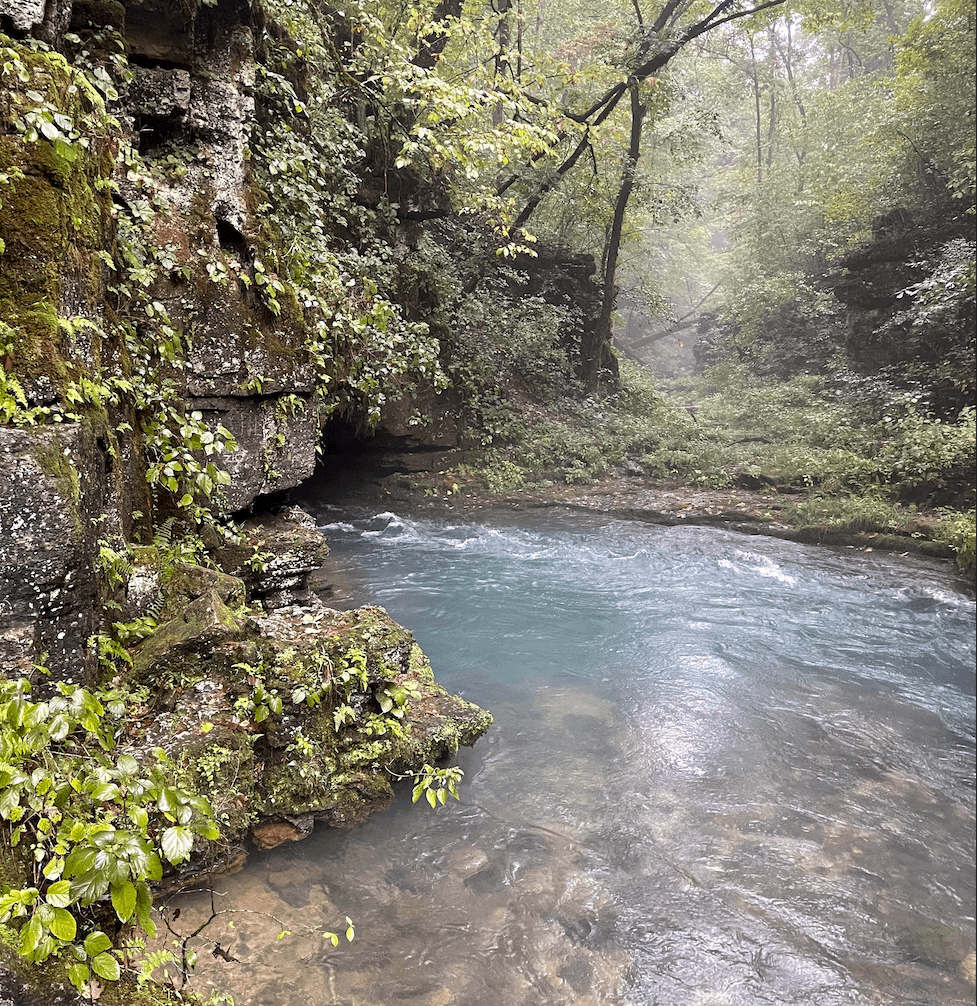
The Eleven Point is the actual Wild & Scenic River. One of the original eight streams Congress designated in 1968, it runs remote and uncrowded through the Mark Twain National Forest, managed by the U.S. Forest Service. Greer Spring — Missouri's 2nd-largest spring at roughly 222 million gallons a day — doubles the river at its midpoint, turning a small Ozark headwater into cold, clear, reliable float water. (Its sister the Current, despite the name, is not on the Wild & Scenic list.)
- Genuinely Wild & Scenic. A federally designated Wild & Scenic River since 1968, USFS-managed, with first-come float camps instead of crowds. This is the most wilderness-feeling float of Missouri's well-known rivers.
- Greer Spring changes everything. Above Greer the river is a small, rain-dependent headwater. Below it — fed by ~222 million gallons a day — the Eleven Point roughly doubles and runs cold and clear right through summer.
- Remote, with few bailouts. Far fewer outfitters and access points than the Current. Long stretches with no road, no cell service, and no help nearby. Plan your shuttle and your water.
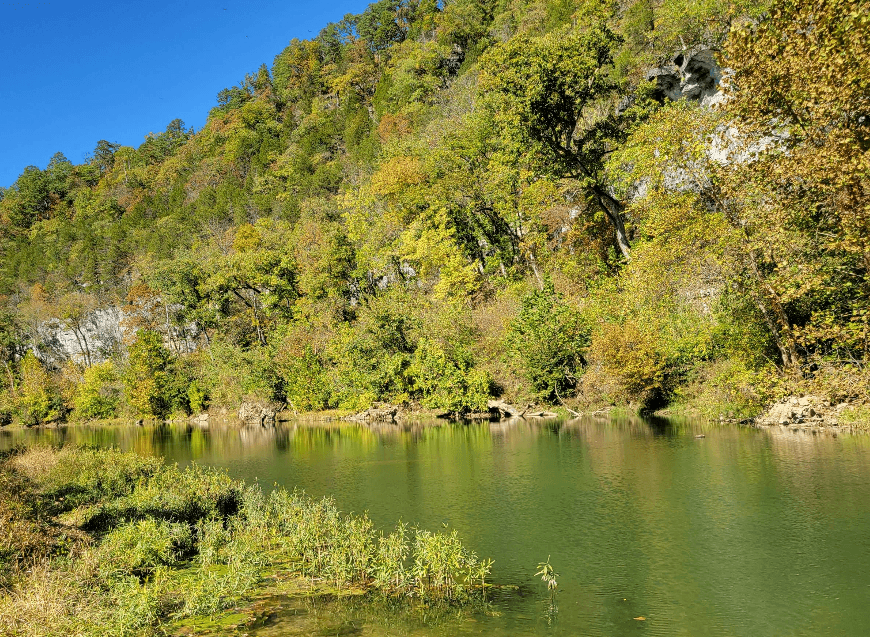
- Wildlife you'll actually see. You may spot bald eagles, great blue herons, and river otters along some of the least-developed water in the state.
Pick your float
The Eleven Point divides cleanly into character zones. Pick by how much time you have, who you’re paddling with, and what you want to see.
Upper Eleven Point — Thomasville to Greer
Small, intimate, and dependent on rain or snowmelt. The river above Greer Spring is a narrow Ozark headwater that can be bony by mid-summer — lovely when it has water, a drag when it doesn't.
Lower Eleven Point — Greer Spring to The Narrows
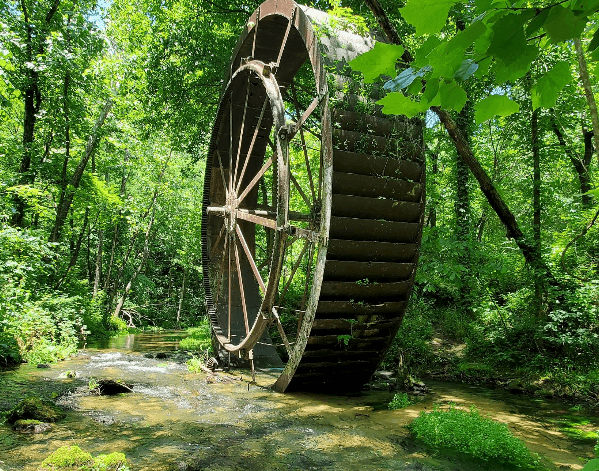
Below Greer Spring's ~222 million gallons a day the river roughly doubles — cold, clear, and reliable through summer. This is the Wild & Scenic heart: mill ruins, blue springs, first-come float camps, and some of the wildest water in the state.
Springs & sights worth stopping for
Outfitters, campgrounds & lodging
Every active service that operates on the Eleven Point. Tap a phone number to call; tap Reserve to book.
Water levels & gauge
Check the gauge before you load the truck. The trend over the last week matters more than today’s number — a falling river after a flood is fine; a rising river isn’t.
Regulations
When to go
Drive times
Before you launch & on the water
- PFDs (legally required — one per person, worn by anyone under 7).
- Dry bag for keys, phone, ID, and a fleece — the spring water is cold even in July.
- More drinking water than you think — a gallon per person per day; springs aren't safe to drink and services are far.
- A downloaded map. This is remote forest with long no-signal stretches.
- Reef-safe sunscreen, a hat, and hard-soled water shoes.
- Extra food and a first-aid kit — help can be hours away.
- Trash bag — float camps are pack-in, pack-out.
- Put in at Greer for reliable water. Below Greer Spring the river roughly doubles and floats all summer; above it can be too low. Greer to Turner Mill or Riverton is the classic.
- Float camps are first-come. USFS riverside camps (Whites Creek, Greenbriar, Morgan Spring, and more) aren't reservable. Arrive early on summer weekends and have a backup gravel bar in mind.
- Line up your own shuttle. Far fewer outfitters than the Current. Book a shuttle ahead (Richards Canoe Rental, Hufstedlers) or stage two vehicles.
- Watch for wildlife. You may spot bald eagles, herons, and river otters — keep a respectful distance and a camera handy.
Nearby attractions
FAQ